
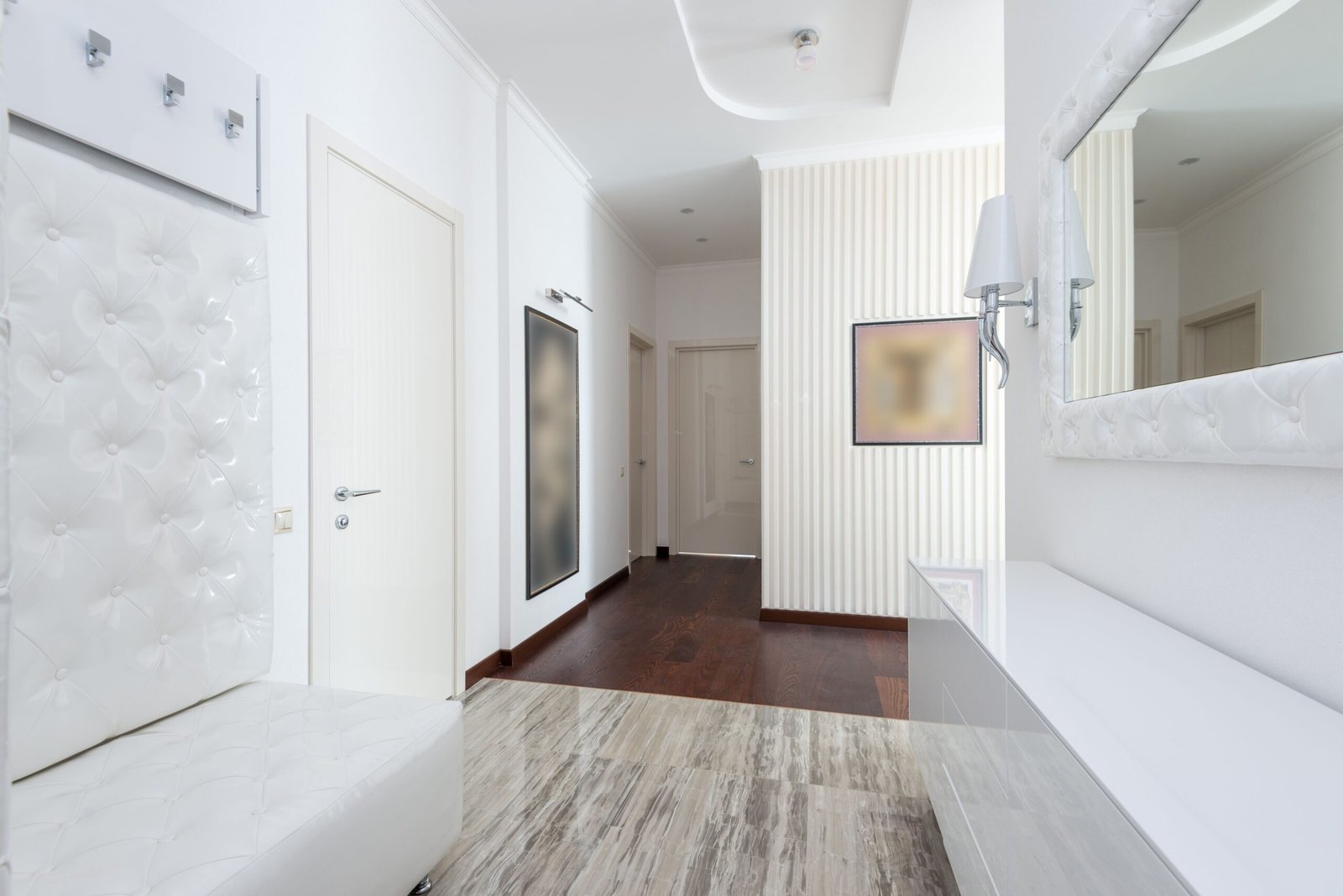
Search for narrow hallway storage, and you’ll be shown the same thing everywhere: a tall, slim cabinet, usually around 9 or 10 inches (23- 25 cm) deep and often more than four feet (122cm) high, with flip-down drawers for shoes.
They fit beautifully. That’s the problem.
Why that shape is the least stable furniture you can buy
Stability comes from a wide base and a low centre of gravity. A hallway cabinet is designed to have neither, because a wide base is exactly what won’t fit in a hallway.
Then you load it. Shoes go in the top drawers as often as the bottom ones, which raises the centre of gravity further. Flip-down drawers swing the weight forward when open, which is the direction it would fall. And it sits in a corridor where people move quickly, often carrying something, often not looking.
Almost every one of these cabinets ships with an anti-tip bracket and instructions to screw it to the wall. That instruction is not decoration.
The part that isn’t in any hallway storage article
Since September 2023, the United States has had a mandatory federal stability standard for furniture, brought in under the STURDY Act after years of campaigning by parents. It requires units to pass real stability testing, including with multiple drawers open and on carpet, simulating the weight of a child up to 60 pounds (27kg).
The standard applies to clothing storage units 27 inches (69cm) or taller. Dressers, chests of drawers, armoires, wardrobes, door chests.
A hallway shoe cabinet is not a clothing storage unit.
So the tallest, narrowest, most tip-prone piece of furniture being marketed for the tightest space in your home falls outside the federal stability rule that covers the dresser in your bedroom. Consumer groups flagged this at the time, noting the rule doesn’t reach other unstable furniture. Nobody writing hallway storage listicles seems to have noticed.
Worth knowing alongside that: retailers were allowed to keep selling stock manufactured before the standard took effect, so older non-compliant units are still in circulation.
How serious is this actually?
Serious enough to be worth two minutes of your attention, and not a reason to panic.
The Consumer Product Safety Commission estimates around 22,500 emergency room visits a year from furniture tip-overs, and 44 percent of those injuries are to children. Since 2000, there have been more than 581 deaths involving furniture, television, and appliance tip-overs, with a child the victim in 81 percent of cases.
If you live alone and nobody under about ten ever visits, the risk to you personally is low. If you have children, or your building has them, or you have a dog that jumps, this is the section of this article that matters most.
The renter’s specific bind
Here’s what makes this a renting problem rather than a furniture problem.
The fix is anchoring. Anchoring means drilling into the wall. Drilling means asking your landlord, waiting for an answer, and making good the holes when you leave. So renters are pushed toward one of two bad options: skip the anchor and use unstable furniture, or drill without permission and deal with it later.
Most articles resolve this by not mentioning it.
What to actually buy instead
Stay under 27 inches (69cm) tall. This isn’t just about the standard’s threshold. Below roughly waist height, a tipping cabinet has much less energy behind it, and a child can’t climb it the same way. A low bench with shoe storage underneath does most of what a tall cabinet does.
Prioritise depth of base over height of unit. A 13-inch (33cm) deep unit is dramatically more stable than a 9-inch (23cm) one, and it still leaves a reasonable walking lane in a standard hallway. Which brings us to the measurement worth taking.
Measure your walking lane before you shop. Hallways in apartments typically run 36 to 48 inches (91- 122 cm) wide. Subtract the depth of anything you’re putting in and see what remains. Below about 30 inches (76cm), two people can’t pass comfortably, and you’ll be turning sideways to carry groceries. A storage solution that makes the corridor unpleasant to use is one you’ll resent within a month.
Storage on one side only. If you put a shoe rack on one wall and hooks on the other, the hallway closes in from both directions and feels far narrower than the measurements suggest. Pick a side.
Load the bottom. Whatever you buy, heavy items go in the lowest drawer. This single habit does more for stability than most product features.
Nothing attractive on top. The classic tip-over sequence starts with a child climbing to reach something. Keys, a phone charger, anything that draws attention upward- keep it off the top surface.
The wall instead of the floor
The most renter-friendly hallway storage doesn’t stand on the floor at all, which sidesteps the tipping question entirely.
Adhesive hooks at coat height handle jackets and bags. Check the weight limits honestly, because a loaded work bag is heavier than most hooks are rated for, and you can’t double up two hooks to carry more than one is rated for. We’ve covered the details in how to remove Command hooks without damaging paint.
A slim rolling cart is the other good answer. It’s narrow, it’s mobile, and if the hallway proves too tight, you move it somewhere else rather than living with a mistake. The caveat is the same as with any tall narrow thing: keep the weight low.
If your hallway walls are exposed brick, adhesive won’t hold at all, and you’ll want brick clips instead. That’s covered in do Command hooks work on brick.
If you already own a tall cabinet
Don’t throw it out. Do three things.
Move the heavy items to the bottom drawer. Clear the top surface. And if there are children in your home or your building, ask your landlord in writing whether you can fit the supplied anti-tip bracket. Frame it as a safety request rather than a decorating one, because most landlords will say yes to that, and a written yes protects you at the end of the tenancy.
If the answer is no, the honest advice is to swap the cabinet for something lower rather than hope.
The short version
Narrow hallways push you toward exactly the furniture shape that most needs anchoring, and renting is the situation where anchoring is hardest. Stay low, keep the base deep, load the bottom, and put as much as you can on the wall instead of the floor.
Measure your walking lane first. Everything else follows from that number.
More renter-friendly storage: damage-free hanging · renter-friendly solutions
Tip-over injury and fatality figures from the U.S. Consumer Product Safety Commission. Standard scope from the CPSC’s adoption of ASTM F2057-23 under the STURDY Act. Rules outside the United States differ, so check your local product safety guidance.